
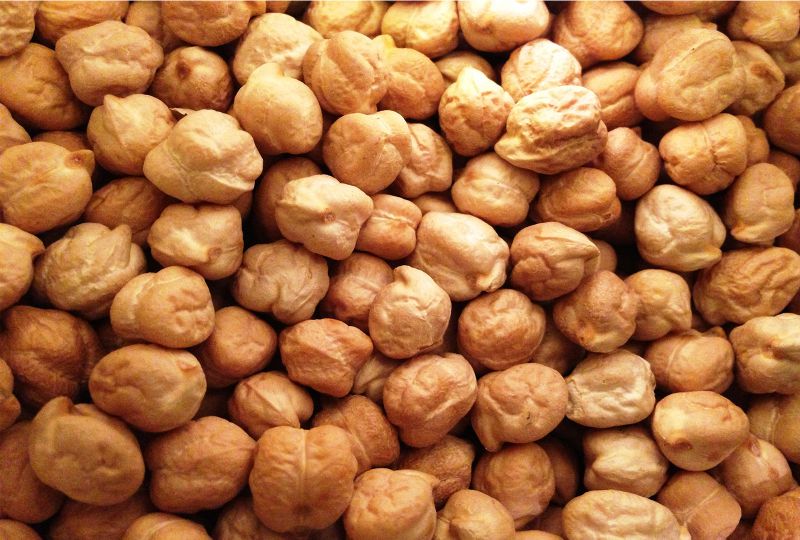
Chickpeas are popular in the Iberian Peninsula.
In Portugal, they are one of the main ingredients in rancho, eaten with pasta and meat, including Portuguese sausages, or with rice.
They are used in other hot dishes with bacalhau and in soup.
In Spain, they are used cold in tapas and salads, as well as in cocido madrileño.
In Italy, chickpeas are eaten with pasta or in soup.
In Egypt, they are used as a topping for kushari.
Nutrition value
Chickpeas are a nutrient-dense food, providing rich content (> 20% of the Daily Value, DV) of protein, dietary fibre, folate, and certain dietary minerals such as iron and phosphorus.
Thiamine, vitamin B6, magnesium, and zinc contents are moderate, providing 10-16% of the DV. Chickpeas have a protein digestibility corrected amino acid score of about 0.76, which is higher than many other legumes and cereals.
Compared to reference levels established by the United Nations Food and Agricultural Organization and World Health Organization, proteins in cooked and germinated chickpeas are rich in essential amino acids such as lysine, isoleucine, tryptophan, and total aromatic amino acids.
A 100-g serving of cooked chickpeas provides 164 kilocalories (690 kJ). Carbohydrates make up 68% of calories, most of which (84%) is starch, followed by total sugars and dietary fibre. Lipid content is 3%, 75% of which is unsaturated fatty acids for which linoleic acid comprises 43% of total fat.