
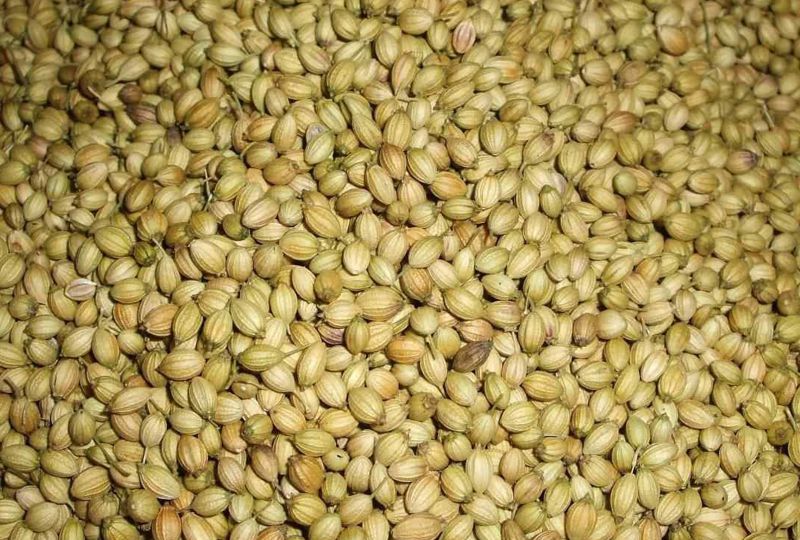
Coriander (Coriandrum sativum), also known as cilantro parsley or dhania.
Coriander is native to regions spanning from southern Europe and northern Africa to southwestern Asia.
The dry fruits are known as coriander seeds. In Indian cuisine they are called dhania.
The word coriander in food preparation may refer solely to these seeds (as a spice), rather than to the plant.
The seeds have a lemony citrus flavour when crushed, due to terpenes linalool and pinene. It is described as warm, nutty, spicy, and orange-flavoured.
Large-fruited types are grown mainly by tropical and subtropical countries, e.g. India, morocco and Australia, and contain low volatile oil content (0.1-0.4%).
The nutritional profile of coriander seeds is different from the fresh stems or leaves.
Leaves are particularly rich in vitamin A, vitamin C and vitamin K, with moderate content of dietary minerals.
Although seeds generally have lower content of vitamins, they do provide significant amounts of dietary fibre, calcium, selenium, iron, magnesium and manganese.
Origin : India
Moisture : 9% to 12%
Purity : 99.50%
Packing : 15kg to 50kg pp bags
Roasting or heating the seeds in a dry pan heightens the flavour, aroma and pungency. Ground coriander seed loses flavour quickly in storage and is best ground fresh. Coriander seed is a spice in garam masala and Indian curries which often employ the ground fruits in generous amounts together with cumin ,acting as a thickener in a mixture called dhana jeera.
Outside of Asia, coriander seed is used widely in the process for pickling vegetables.
In Germany and South Africa, the seeds are used while making sausages.
In Russia and Central Europe, coriander seed is an occasional ingredient in rye bread (e.g. borodinsky bread), as an alternative to caraway.
Coriander seeds are used in brewing certain styles of beer, particularly some Belgian wheat beers. The coriander seeds are used with orange peel to add a citrus character.