
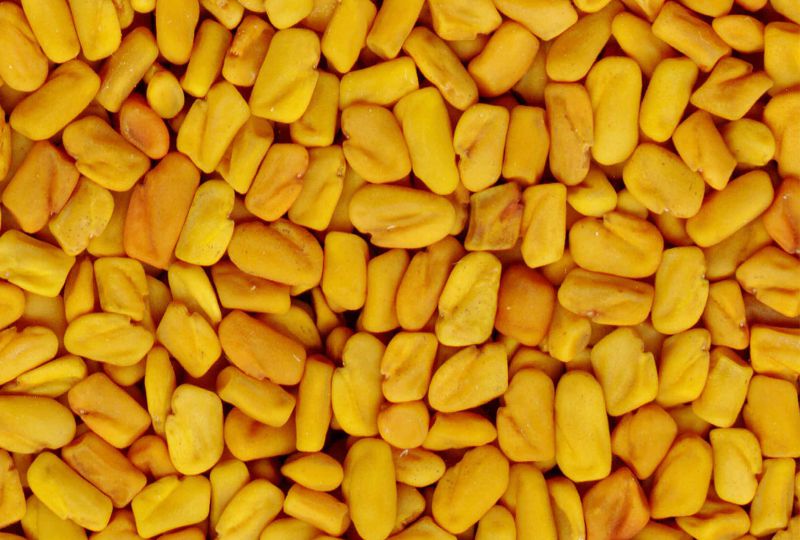
Fenugreek is believed to have been brought into cultivation in the Near East. Fenugreek is an annual plant in the family Fabaceae, with leaves consisting of three small obovate to oblong leaflets. Major fenugreek-producing country is India. It is cultivated worldwide as a semiarid crop, and its seeds are a common ingredient in dishes from the Indian subcontinent.
While Zohary and Hopf are uncertain which wild strain of the genus Trigonella gave rise to domesticated fenugreek, charred fenugreek seeds have been recovered from Tell Halal, Iraq, (carbon dated to 4000 BC) and Bronze Age levels of Lachish and desiccated seeds from the tomb of Tutankhamen.
Fenugreek is used as an herb (dried or fresh leaves), spice (seeds), and vegetable (fresh leaves, sprouts, and micro greens). Sotolon is the chemical responsible for fenugreek's distinctive sweet smell.
Cuboid-shaped, yellow- to amber-colored fenugreek seeds are frequently encountered in the cuisines of the Indian Subcontinent, used both whole and powdered in the preparation of pickles, vegetable dishes, daals, and spice mixes such as panch phoron and sambar powder.
When the seed kernels are ground and mixed with water they greatly expand, to which hot spices, turmeric and lemon juice are added to produce a frothy relish eaten with a sop.
Fenugreek is used for digestive problems such as loss of appetite, upset stomach, constipation, and inflammation of the stomach (gastritis). It is also used for conditions that affect heart health such as “hardening of the arteries” (atherosclerosis) and for high blood levels of certain fats including cholesterol and triglycerides.
Fenugreek seeds are rich source of carbohydrates, protein, Vitamin A and C, iron, calcium, and minerals.