
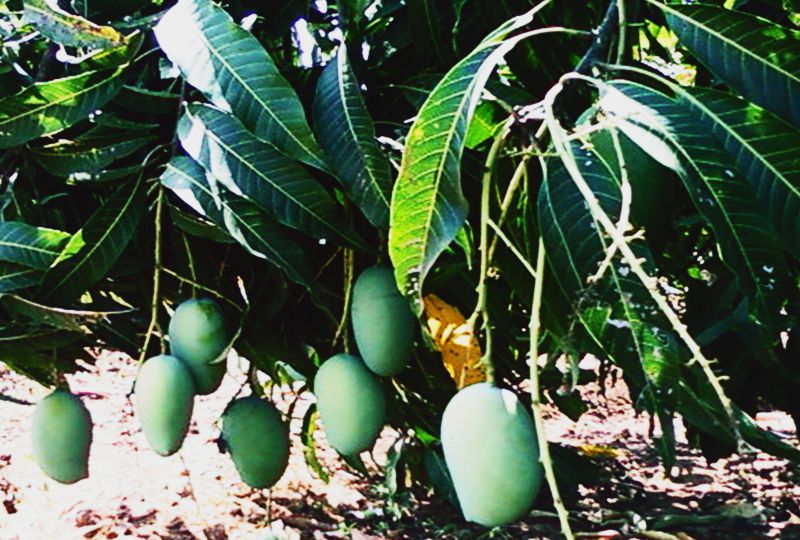
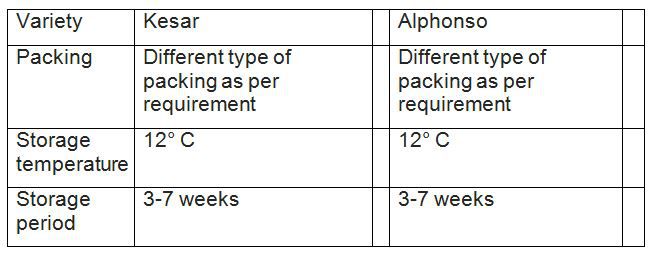
We are serving with two type of best varieties of mangoes known worldwide. The Alphonso and Kesar. We grow best quality of kesar variety in our farm that located near Junagadh in Gujarat.
We follow stringent quality standards at each stage of production and each stage of supply chain. We master in growing stage. We are associated with more than four decade in cultivation of kesar mangoes.
The ripe fruit varies in size and color. Cultivars are variously yellow, orange, red, or green, and carry a single flat, oblong pit that can be fibrous or hairy on the surface, and which does not separate easily from the pulp.
Ripe, unpeeled mangoes give off a distinctive resinous, sweet smell.
Inside the pit 1–2 mm (0.039–0.079 in) thick is a thin lining covering a single seed, 4–7 cm (1.6–2.8 in) long.
• Mangoes are widely used in cuisine.
• Mangoes are often prepared charred in Hawaii.
• Unripe mango may be eaten with bagoong (especially in the Philippines, fish sauce, or with dash of salt.
• Mangoes may be used to make juices, mango nectar, and as a flavoring and major ingredient in ice cream and sorbetes.
• Mango is used to make juices, smoothies, ice cream, fruit bars, raspados, aguas frescas, pies, and sweet chili sauce, or mixed with chamoy, a sweet and spicy chili paste.
• Mango fruit is rich in pre-biotic dietary fiber, vitamins, minerals, and poly-phenolic flavonoid antioxidant compounds.
• According to new research study, mango fruit has been found to protect against colon, breast, leukemia and prostate cancers. Several trial studies suggest that polyphenolic anti-oxidant compounds in mango are known to offer protection against breast and colon cancers.
• Mango fruit is an excellent source of Vitamin-A and flavonoids like beta-carotene, alpha-carotene, and beta-cryptoxanthin. 100 g of fresh fruit provides 765 IU or 25% of recommended daily levels of vitamin-A.